
Our Freedom Capital — SEO + AI SEO Audit
Our Freedom Capital needed organic visibility in a competitive real estate space where users search with transactional intent (homes for sale, apartments for rent, location-based queries). At baseline, the site had minimal organic presence, limited keyword visibility, and needed a clear SEO foundation for sustainable lead acquisition.
Situation
A) Technical + performance audit (mobile-first)
PageSpeed/CWV diagnosis and improvement plan (focus on mobile experience).
What I delivered
D) Measurement plan
Recommended GA + GSC setup for an optimization loop and reporting structure.
B) Search visibility + market benchmark
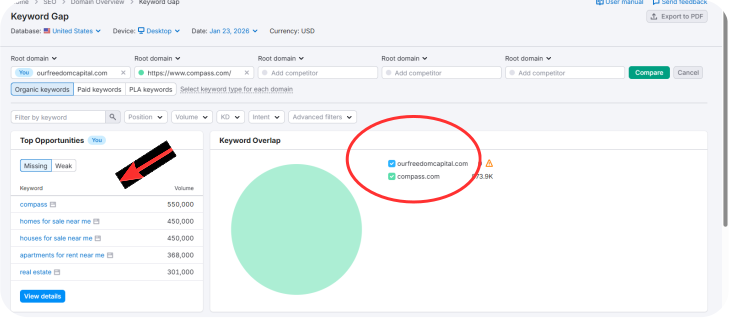
Keyword visibility check + competitive benchmark against a dominant player (Compass.com) to show the gap and what “good” looks like.
C) Content + intent strategy
Identified missing intent coverage (location pages, buyer/seller/renter intent, evergreen topics) and outlined a content system that maps to how people actually search for real estate.
Key Findings
Performance baseline
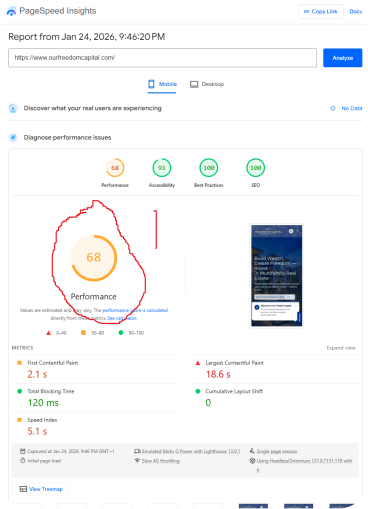
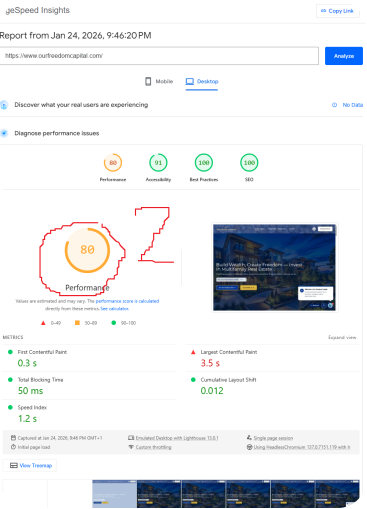
PageSpeed Insights: Mobile 68/100, Desktop 80/100 (mobile is the priority risk).
Visibility baseline
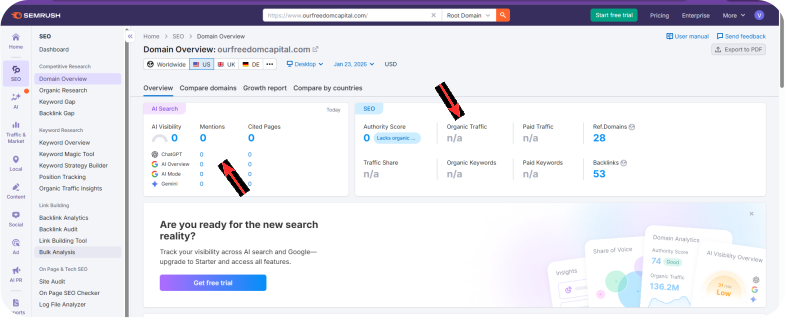
Site was not ranking for meaningful keywords, had no visibility for high-intent real estate terms, and showed minimal organic traffic.
Authority gap
Domain authority captured as 0, meaning trust/authority needs to be built to compete in SERPs.
Core reasons
Lack of keyword research, insufficient content depth, and missing location/intent-based pages.
Competitive + Keyword/Content Gap-driven Analysis
_____________
A) Competitor benchmark + keyword gap model (Compass as the “north star”)
I used Compass.com as a reference competitor because it’s already doing what works at scale: ranking for thousands of transactional + informational keywords, strong visibility for city/neighborhood/buyer-intent searches, supported by a deep ecosystem (listings, guides, market insights).
B) Keyword research framework built for transactions (and AI search)
Instead of “generic real estate keywords,” the keyword system was structured around demand clusters that lead to revenue:
High-intent buyer/renter keywords
Location-based targets (e.g., Wisconsin)
Informational queries users ask before transacting
AI-search-friendly semantic topics (to support LLM discovery and summarization)
C) Content gap → content architecture → content calendar (Q1 plan)
The content roadmap translated the gap into a scalable publishing system built around:
priority service pages
location-specific landing pages
buyer/seller/renter guides
evergreen blog topics
And it included the production rules that increase ranking probability: answer real user questions, target transactional intent, build topical authority, and strengthen internal linking for ranking power.
30 / 60 / 90 plan
Days 0–30: Clarity + foundation
Competitor teardown (Compass + local players): identify what ranks + why (formats, keyword strategy, structure/UX).
Tracking readiness: GA + GSC connected
Implement immediate PageSpeed wins (images/WebP/caching/JS-CSS).
Build keyword universe: buyer/renter + location + informational + AI semantic topics.
Days 31–60: Technical depth + architecture
Fix the highest-impact technical issues to support content scaling.
Full technical audit: crawl/index, structure, schema, internal linking, mobile UX + conversion blockers.
Finalize information architecture: service + location landing page framework.
Days 61–90: Content engine + topical authority
Publish SEO-optimized content that targets transactional intent + builds authority + is internally linked for ranking power.
Monitor, iterate, and refine based on performance feedback from GA/GSC.
Launch Q1 content calendar: service pages, location pages, buyer/seller/renter guides, evergreen blog topics.

___________
Summary/Recommendations
Expected Business Impact
By implementing the strategy, the audit projects outcomes such as: increased organic visibility in market searches, qualified inbound leads without ad spend, stronger brand authority across Google + AI platforms, sustainable long-term traffic growth, and improved trust/conversion rates
___________